
Apeiron’s Boss Rush Balance
July 2023 - October 2023
A study examining the balance and design changes I proposed to repurpose Apeiron’s Boss Rush mode from a tournament-exclusive game mode to one publicly available. Focused on adjustments to difficulty curves, item balance, and decision opportunities. Created during my time at Foonie Magus, Hong Kong.
ABSTRACT
This cast study examines the design challenges and balance adjustments made to Boss Rush, a competitive game mode in Apeiron in order to evaluate how it could evolve from a short, tournament-oriented game mode into one with broader and longer-term appeal within the constraints of the development team/pipeline. Rather than altering core mechanics, the approach emphasized creating meaningful decision points in areas that previously felt predetermined. By tweaking the artifact pools, apostle drops, and downtime events, the skill-based challenge of the original mode was preserved, all the while introducing new opportunities for more personal strategic depth and sustained replayability. This case shows how a mode originally built for tournament fairness could be reshaped into one that supports long-term enjoyment for a wider audience. By adding meaningful options where players previously faced uniform outcomes, Boss Rush was transformed from a format designed for a few into an experience accessible and engaging for many.
Boss Rush Introduction
Apeiron is a real-time card-battling game developed by Hong Kong game studio Foonie Magus. At the time of this project, Apeiron only had the roguelite PvE dungeon crawler game mode. Traditional Apeiron dungeon runs lasted up to 30 hours, with players battling through cycles of dungeon rooms until reaching the upper limit difficulty. Boss Rush is a game mode created for the Apeiron Guild Wars Season 2 Invitational, a tournament where the top sixteen ranked guilds competed in a best-of-five, double-elimination format. Designed to reduce RNG and improve audience viewability, the tournament mode condensed dungeon runs into thirty-minute sequences of consecutive boss encounters.
Several terms and mechanics are central to understanding Boss Rush and its design adjustments:
Cycles, Depths, Rounds, and Rooms - The dungeon is structured hierarchically (Index 1). Three Depths form a Cycle, each Depth contains several Rounds, and each Round is made up of selectable Rooms. Progression through these layers determines pacing and difficulty scaling.
Apostles - Companions that join players in battle. There are six classes (Hunter, Guardian, Warrior, Mage, Rogue, Priest), with each class having eight unique skills. Every Apostle is equipped with three random skills, meaning players adapt their playstyle depending on what skills their Apostles have.
Artifacts - Items that can provide powerful, run-defining effects, obtained at the beginning of each run, and after defeating each boss. Artifacts can be aligned to either Good or Evil: Good artifacts provide straightforward bonus stats, while Evil artifacts grant stronger bonuses balanced by negative stat trade-offs. This alignment system adds strategic weight to artifact selection and creates distinct build paths.
Downtime Events - Non-combat rooms such as shops, campfires, and alignment events (Index 2). These moments allow for resource management, leveling up, and strategic planning between battles. It is important to note that the original tournament version of Boss Rush excluded event rooms entirely.
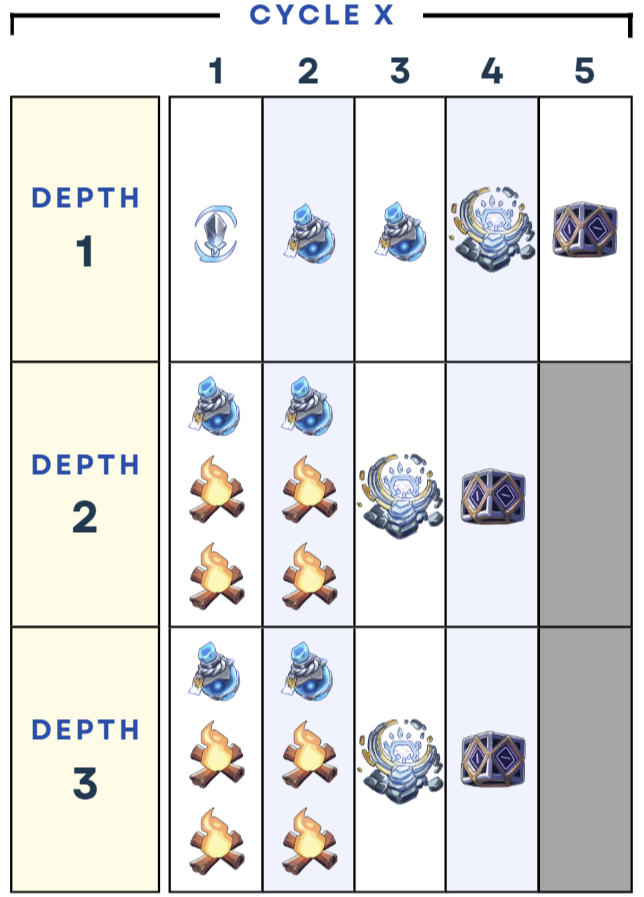
Index 1: Original Boss Rush Dungeon Visualization
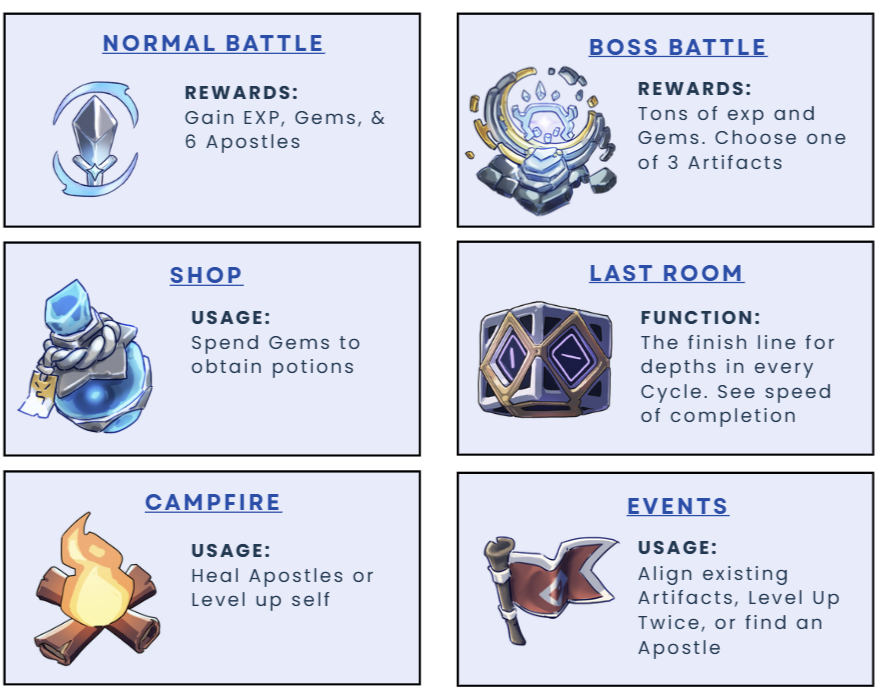
Index 2: Dungeon Rooms Type Key
Potential Problems
Boss Rush’s original structure rewarded consistent mechanical execution instead of unique playstyle and approach. Every decision that competitors had to make outside of boss battles had a clear “optimal” choice. While this linearity was effective for keeping competition fair, it did not give much room for creative decision making. If the team were to release the tournament version for public play, this lack of variation would likely lead to problems having to do with the game mode's replayability factor.
Adjustments would need to be made in a few areas in order to fix this:
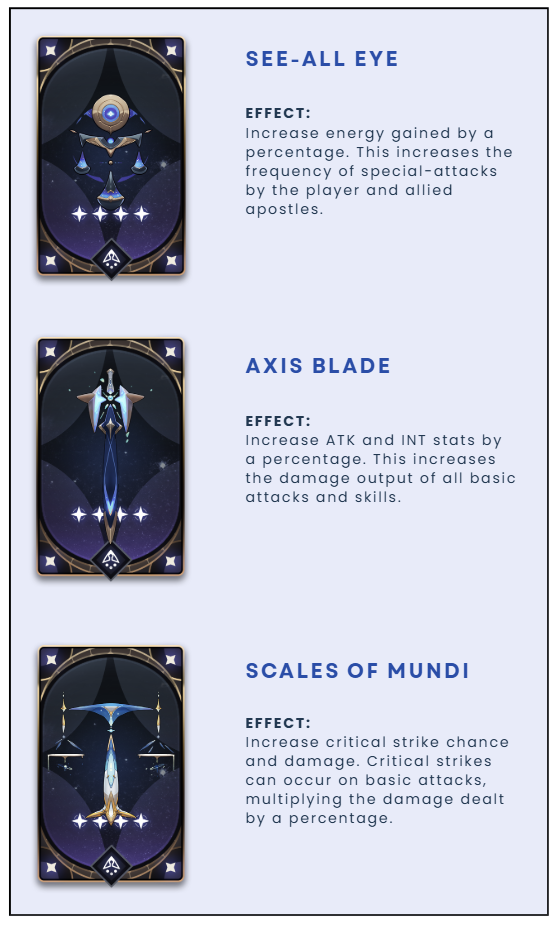
Apostle/Artifact Choice - Apostles appeared with guaranteed optimal stats, and artifacts were narrowed to damage-oriented effects (Index 3). Due to available artifacts effectively having the same effect, players quickly identified the strongest one, leading to repetitive decision making.
Downtime Experience - Shops often produced potion oversupply, making campfires for leveling up the default choice. Players coined the term “Shopkeeper” for runs where players' potions piled up to the max, showing the lack of weight obtaining potions had.
Progression Wall - Difficulty scaling was tuned for thirty-minute tournament matches. Players can only reach the start of Cycle 5 in this time, so past Cycle 5, bosses began significantly outpacing player growth, creating difficulty spikes that would make progressing near-impossible.
Solution through Choice
To broaden Boss Rush beyond the Invitational, adjustments focused on promoting both replayability and player expression. While the idea of introducing new mechanics was discussed early on, it was determined that doing so would delay the launch and also eat into the development pipeline by too much.
As a result, the design work focused on adding meaningful options to existing systems, and finding places to build off of original frameworks instead of creating entirely new mechanics:
Starting Artifact Variety - This refers to Artifacts obtained at the start of each dungeon run. In the original tournament format, starting artifacts only provided flat damage stat increases. The revised system introduced three unique starting artifact routes that supported different styles of gameplay (See Index 4): Syn’s Winged Boots (dash distance increase + dash cooldown reduction), Torchsoul Charm (skill cost reductions), and Invocation of Infinity (total mana pool increase). These artifacts did not force players into rigid strategies but instead offered situational strengths that could be capitalized on throughout a run. Syn’s Winged Boots made dodging boss attacks more consistent while also making mis-timed dashes less punishing, an option designed to smoothen the difficulty curve. Torchsoul Charm effectively gave players an additional 30 mana, attractive to players who were most confident in taking the bosses down quickly. Invocation of Infinity gave players the highest late game value by enabling chain casting against late cycle bosses, meant for experienced players who are able to consistently reach late game. Beyond adding strategic depth, these artifacts created a meaningful first decision with real tradeoffs that were felt throughout the entirety of each run.
Conclusion and Results
Post-rebalance, Boss Rush had traction in two areas: live player participation and booth reception at the Electronic Sports and Gaming Summit (ESGS) 2023 in Manila. Online, more than 500 players, or 80% of the existing player base, took on the mode at launch, with the rank 1 position changing hands five times on the final day of the leaderboard. The momentum paired with positive community feedback confirmed strong appeal among competitive players. At ESGS 2023, Apeiron’s booth featured the new rebalanced mode for first-time players to try out (Indexes 9-10). Although only 16 visitors were able to defeat the first boss on their first try across the three-day convention, roughly 120 participants ended up joining the community afterwards, with 50% participating in the following virtual Boss Rush game night.
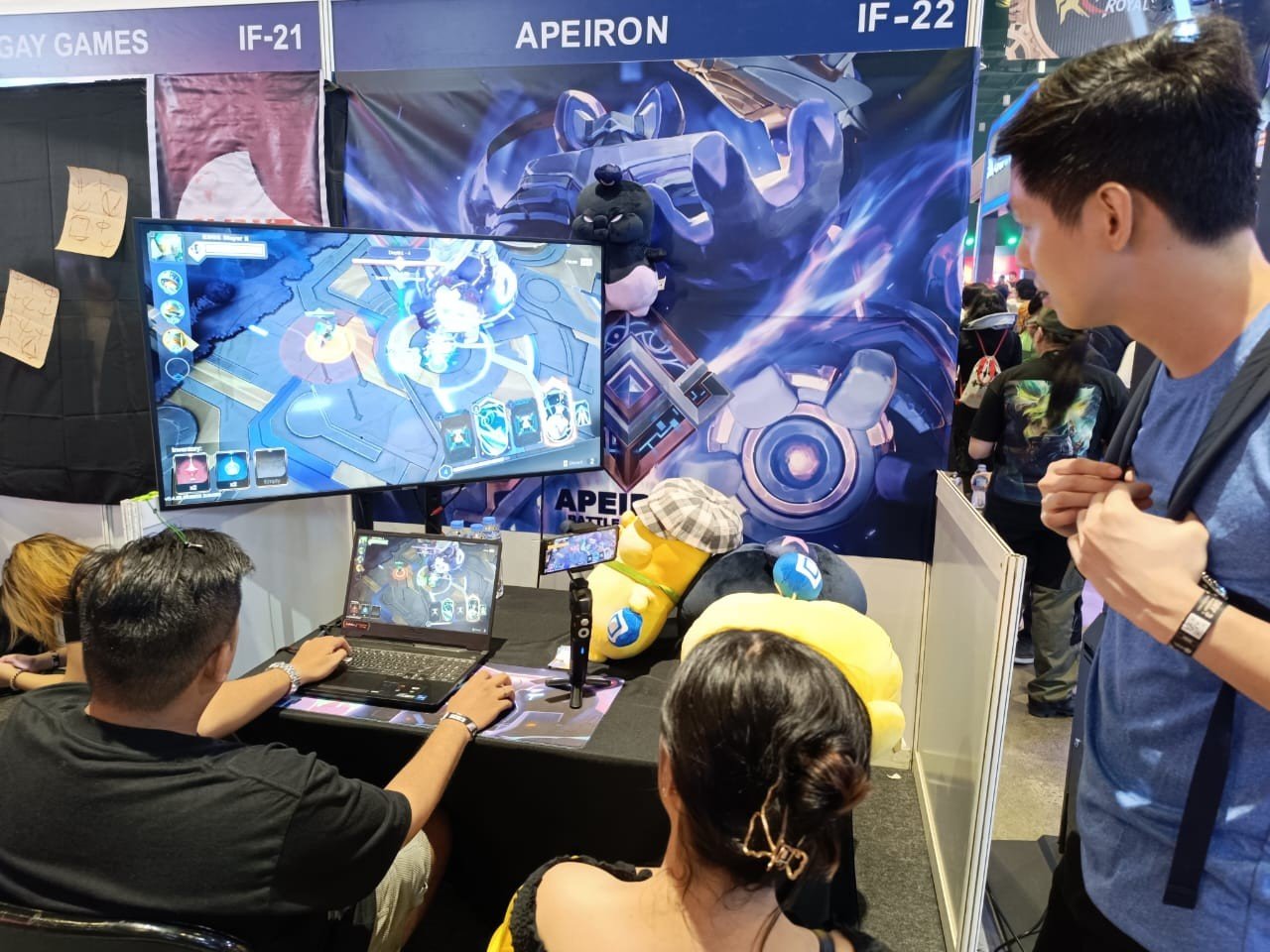
Index 9: Boss Rush at Electronic Sports and Gaming Summit 2023 IndieFest Booth
Index 3: Original Starting / Dropped Artifacts
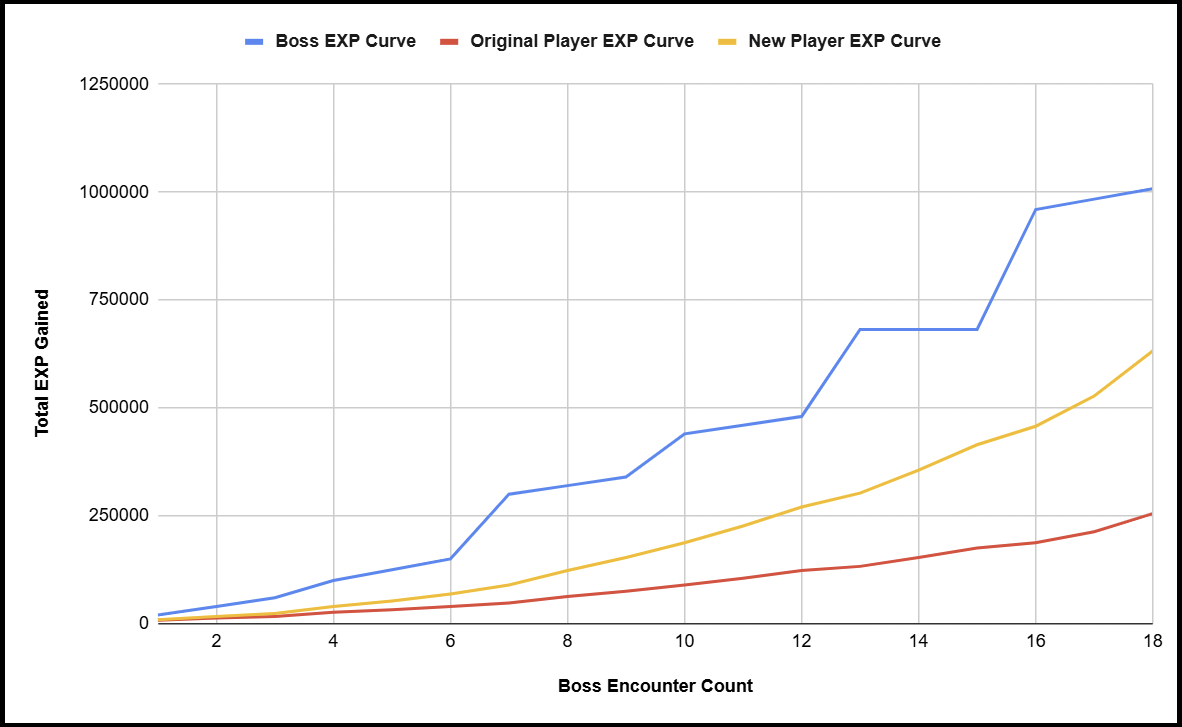
Index 7: Boss EXP compared to Original EXP vs New EXP Curves at each Boss Encounter Count
Apostle Variability - In the tournament version, Apostles had max stats and the exact same skills every time. That earlier system made Apostles too powerful while also taking away the ability for other skills to shine. The revised system made all skills random, while also making higher stat apostles only appear in later cycles. This created a fairer balance while giving players the chance to test a variety of apostle combinations, adding a healthy amount of variety to each run while pulling back some power from the Apostles.
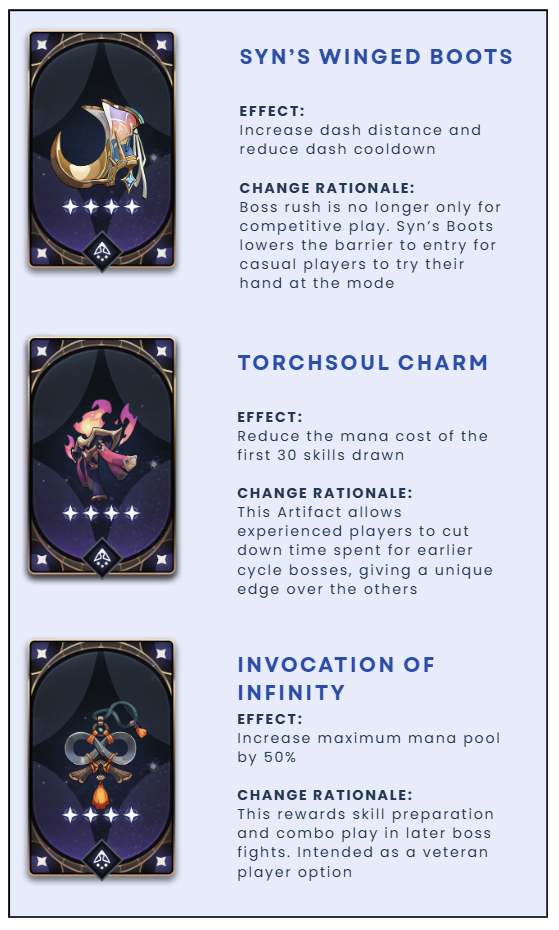
Index 4: New Boss Rush Artifacts (Starting Artifacts Choices)
Dropped Artifact Variety - This refers to the Artifacts that can be dropped after each boss defeat. The overall artifact pool expanded from 3 to 8, introducing offensive, defensive, and utility artifacts (Index 5). Each artifact has special use-cases against different bosses, making no true “Best-In-Slot” options. This expansion encouraged players to strategize artifact choices based on dungeon state and what artifacts they had already collected. If a player knew the ins and outs of each boss, they would quickly be able to identify which artifact suited the upcoming bosses the best, whereas newer players would be given the opportunity to experiment around with their build, and see what artifacts they enjoyed using the most. Additionally, a pool of 8 artifacts meant that there were now a total of 56 drops combinations, from the previous one combination.
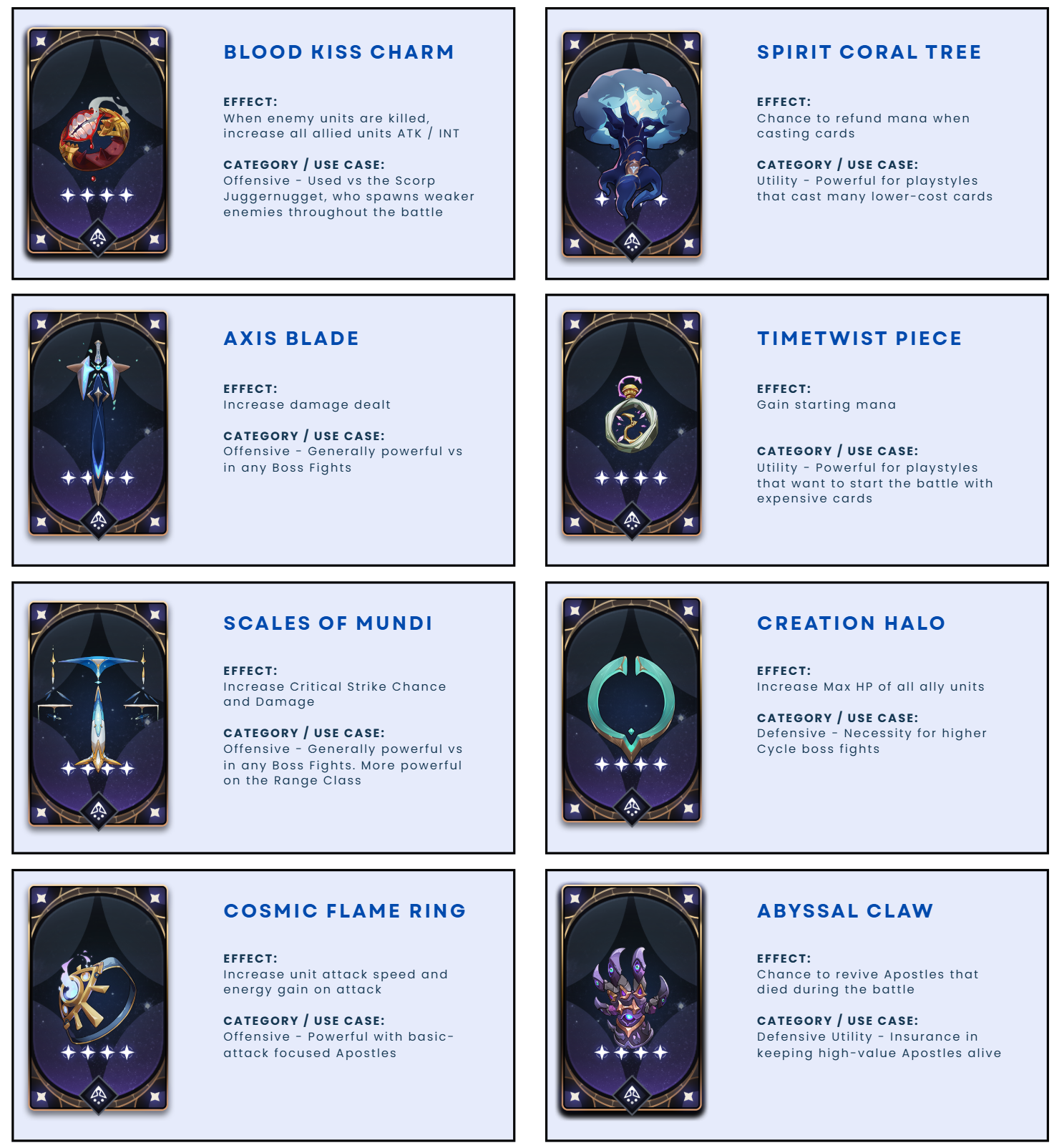
Index 5: New Boss Rush Artifacts (Boss Dropped Artifact Pool)
Downtime Decisions - Unlike the tournament version of Boss Rush, the public version introduced event room types (Index 6) in the dungeon. Two types of new events appeared, one allowing players to align their artifacts as either Good or Evil, and the other giving players a chance to either level up twice or recruit an additional apostle. Shops placement was also reworked: instead of appearing in spots that did not require decision making which led to potion oversupply, they were placed only next to campfires. This forced players to decide between purchasing potions for extra help, or leveling up at the campfire, turning what was once a trivial choice into a meaningful trade-off. These changes utilized something that already existed in the game, and transformed downtime into having many more opportunities for strategy outside of the battle.
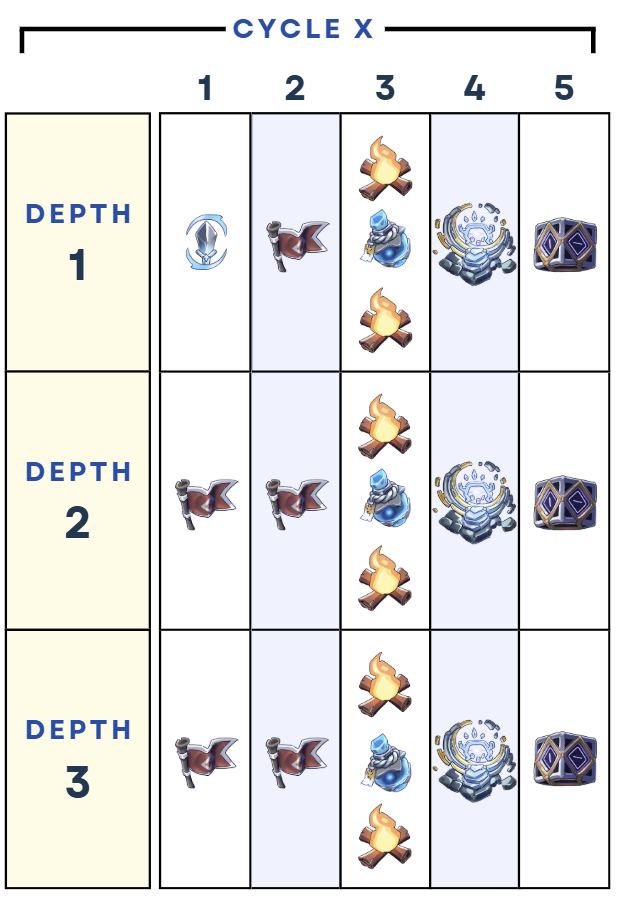
Index 6: New Boss Rush Dungeon Layout Visualization
Progression Adjustments - In the tournament version, bosses past Cycle 5 immediately one shot all players. This is due to the rate at which bosses gain levels compared to players (See Index 7). In this graph, it is clear that the amount of EXP gained by the boss (Blue line) over the course of the dungeon run far outweighs the amount of EXP gained by the player (Red line), leading to this major disparity in levels. As mentioned in point 4, a new event was added that provided additional level-up opportunities for players. The new player EXP curve can be seen in the chart (Yellow line), and noticeably closes the gap between the player and boss. These new level up opportunities were placed in Depths 2/3 to smooth difficulty scaling across the board, making the earlier cycles easier for the existing non-competitive player base, while also serving as the difference maker for survival against the Cycle 5+ bosses.
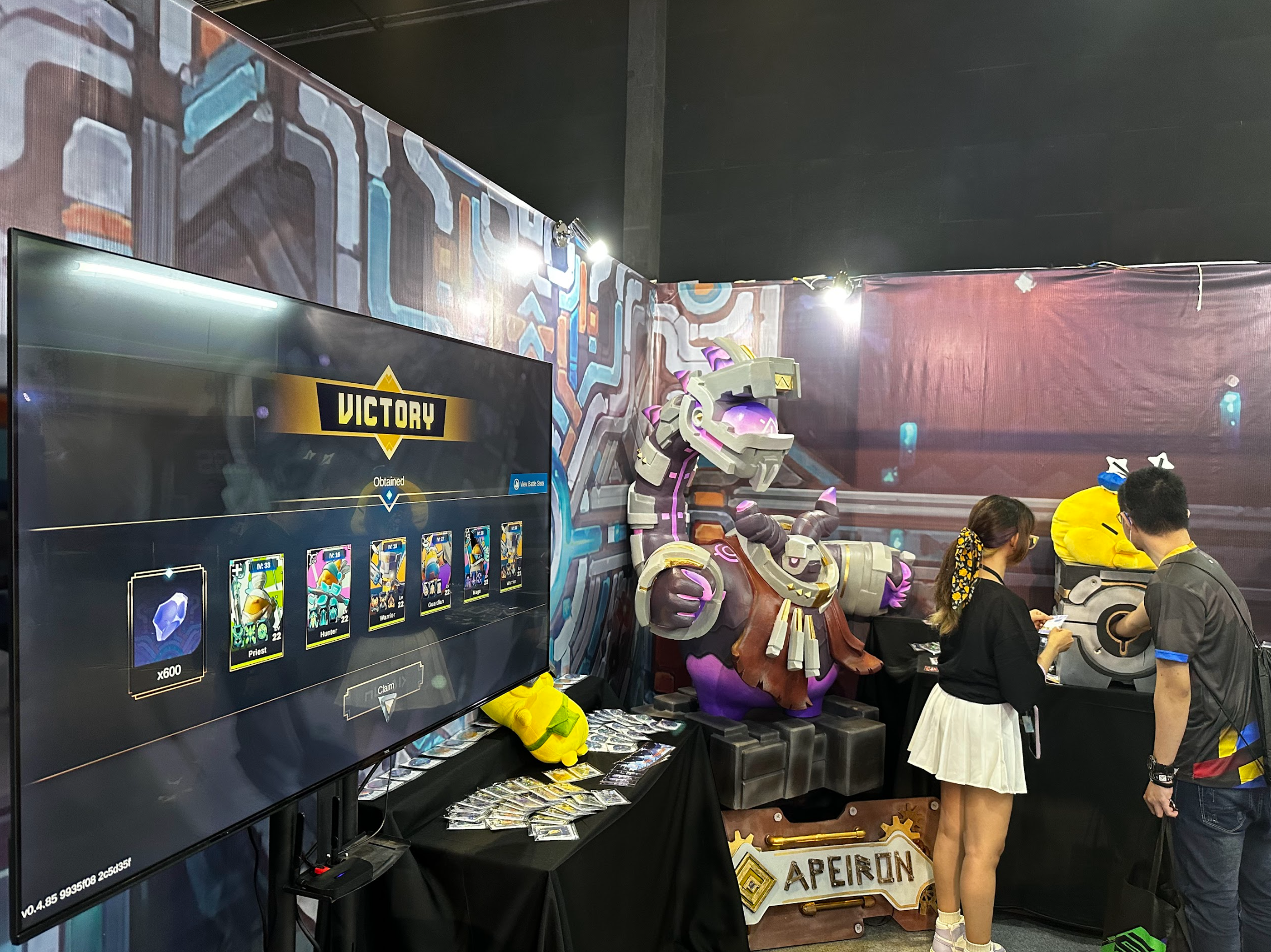
Index 10: Boss Rush at Electronic Sports and Gaming Summit 2023 Main Booth
The evolution of Boss Rush demonstrates how targeted balance changes can reshape a mode designed for a narrow competitive context into one that can serve the games general playerbase. By focusing on overlooked places between battles, the balance and design changes were able to create new opportunities for player expression without changing the core boss battle experience. The project highlights how meaningful options, even when introduced through seemingly small changes, can transform a specialized mode into an experience that anyone can enjoy.
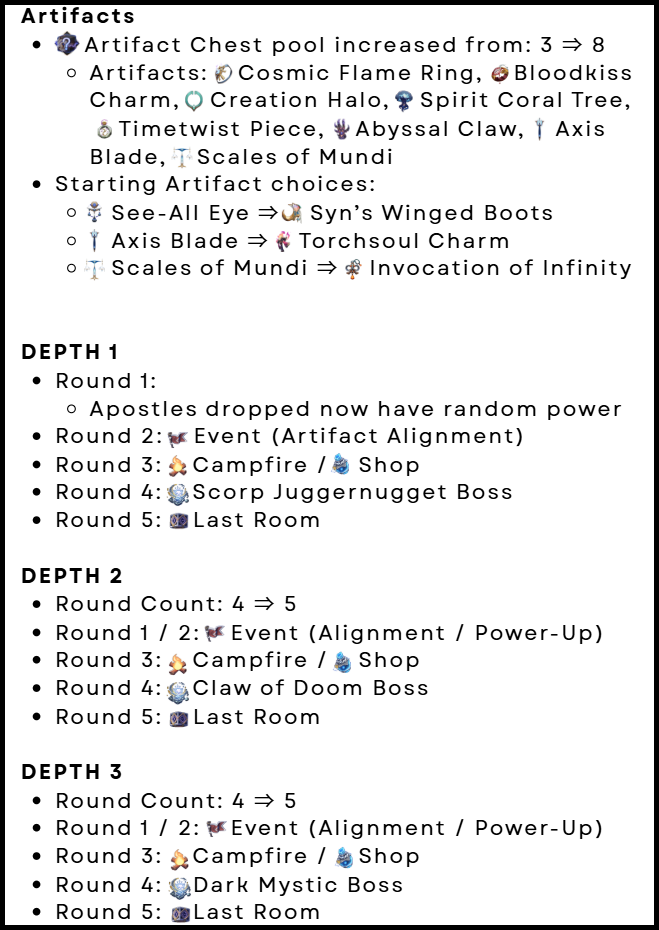
Index 8: Full Boss Rush Balance Patch Notes